 |
| Palawan toadlet |
The Palawan toadlet (Pelophryne albotaeniata), also known as the white-striped flathead toad, is a diminutive endemic amphibian inhabiting the high-elevation montane and mossy forests of Palawan. It is a semi-arboreal species of small toad, and although there were a few occasions that we found this species during daytime, it hides during the day and is largely active at night. The toadlet was long considered rare and elusive, but we believe that this is only because this species thrives on the slopes and ridges at 1100 masl and above, places inaccessible to most people at night.
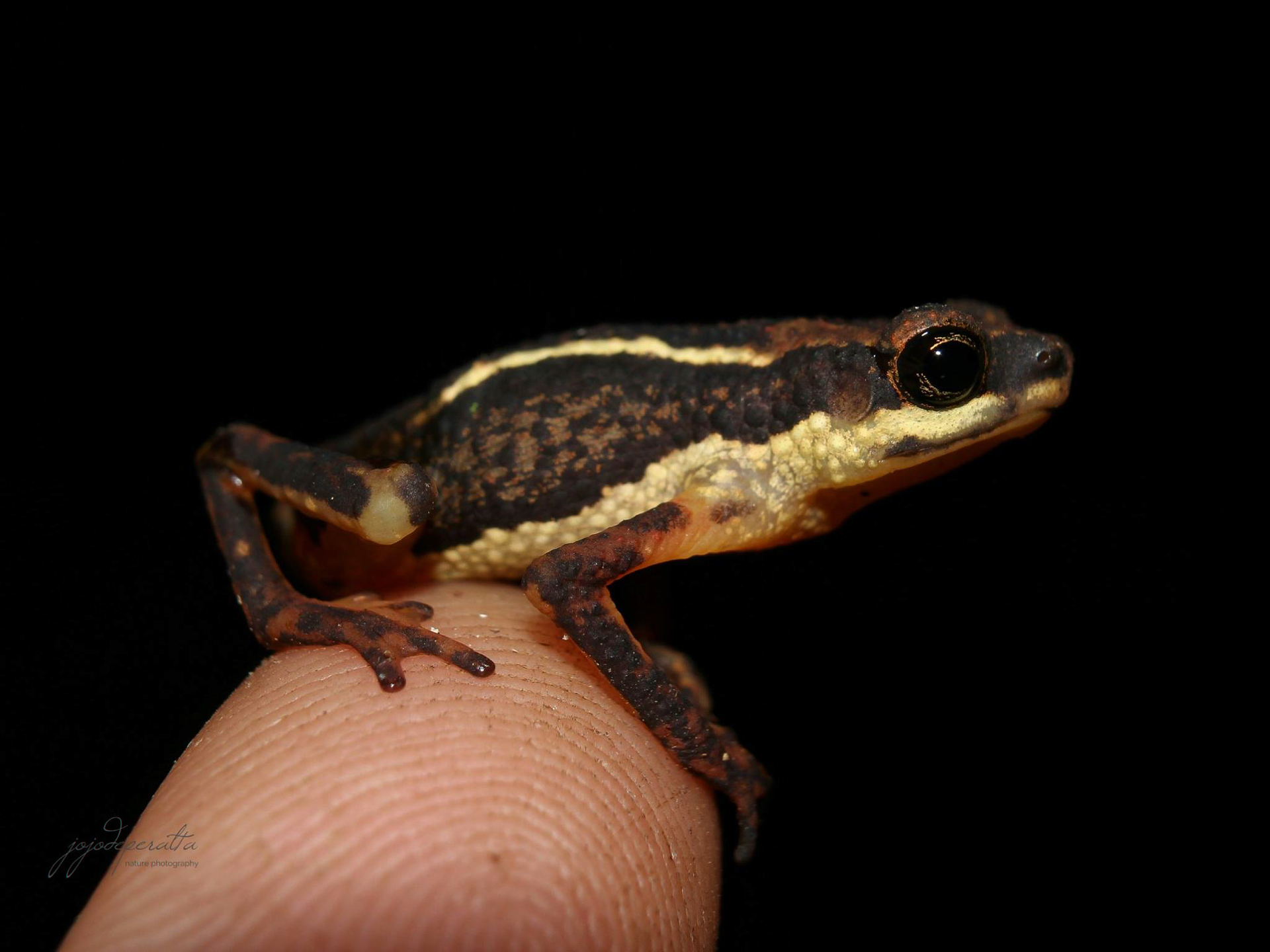 |
| Palawan toadlet adult size |
They are small and hard to see, males typically reach lengths of 18–20 mm, while females are slightly larger at 19–23 mm. On most occasions, we only found it by following the sound of its calls. We often found the males calling from low vegetation at night. The calls are usually a long series of clear, high-pitched ticking notes. There are no other animals in the Palawan rainforest that can make sounds or calls like the Palawan toadlet, and the best way to know if this species occurs in a certain location is by waiting for dusk and listening for its calls. A toadlet is almost impossible to find during the day when it is hiding in thick leaf litter or moss-covered vegetation.
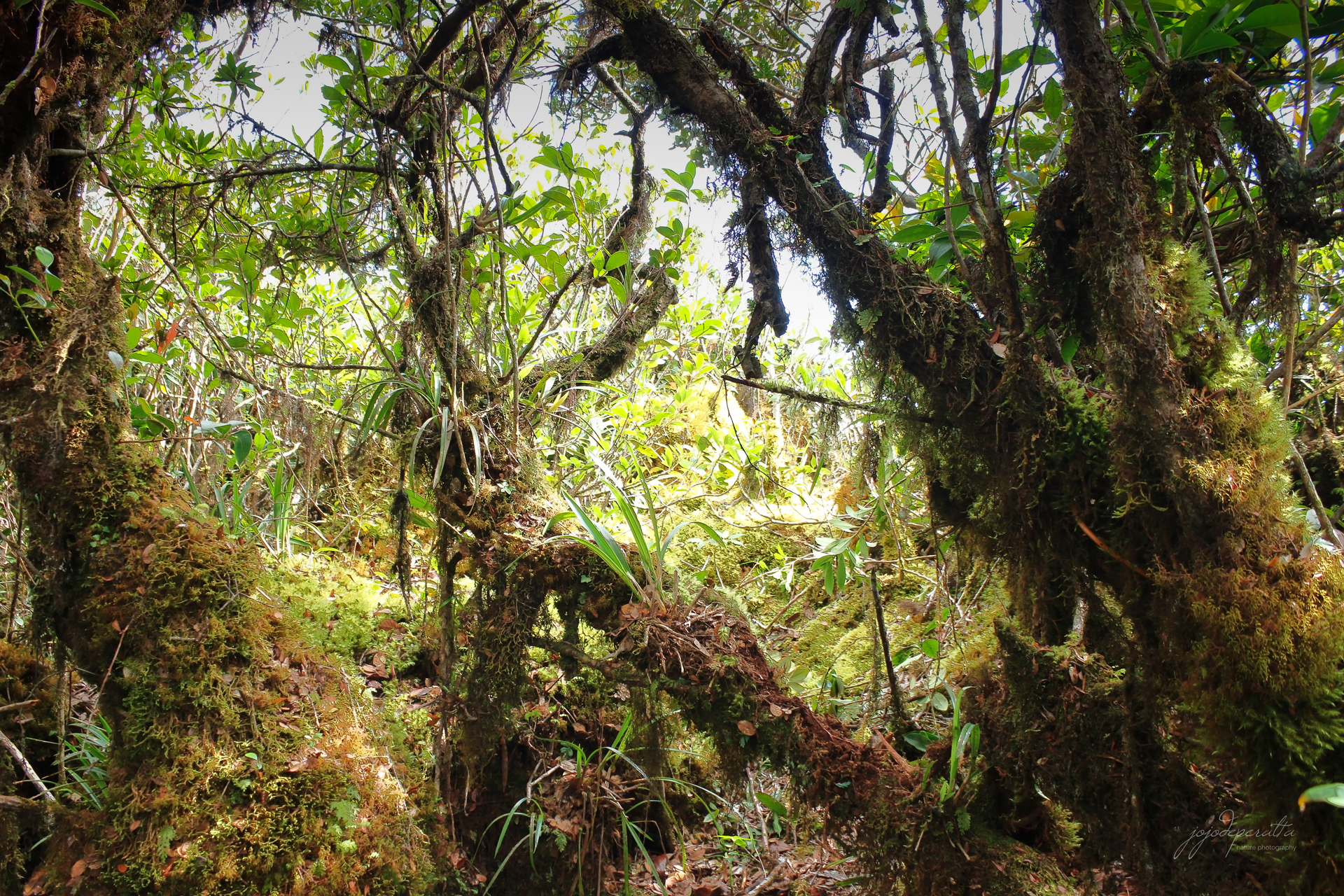 |
| Palawan Toadlet habitat in the Pulgar Range |
The Palawan Toadlet occurs in the peaks and mossy forests inside the Mount Mantalingahan Protected Landscape, Cleopatra's Needle Critical Habitat, Mount Victoria, and the Anepahan mountain range. It was recorded in the mountains of San Vicente, a northern municipality in Palawan, and I have seen photos taken from a peak near Mt. Gantung in Sofronio Espanola. This toadlet also thrives at Mount Stavely and Stavely Range, Mount Peel, Mount Beaufort, Thumb Peak, and all the lesser peaks of the Pulgar Range.
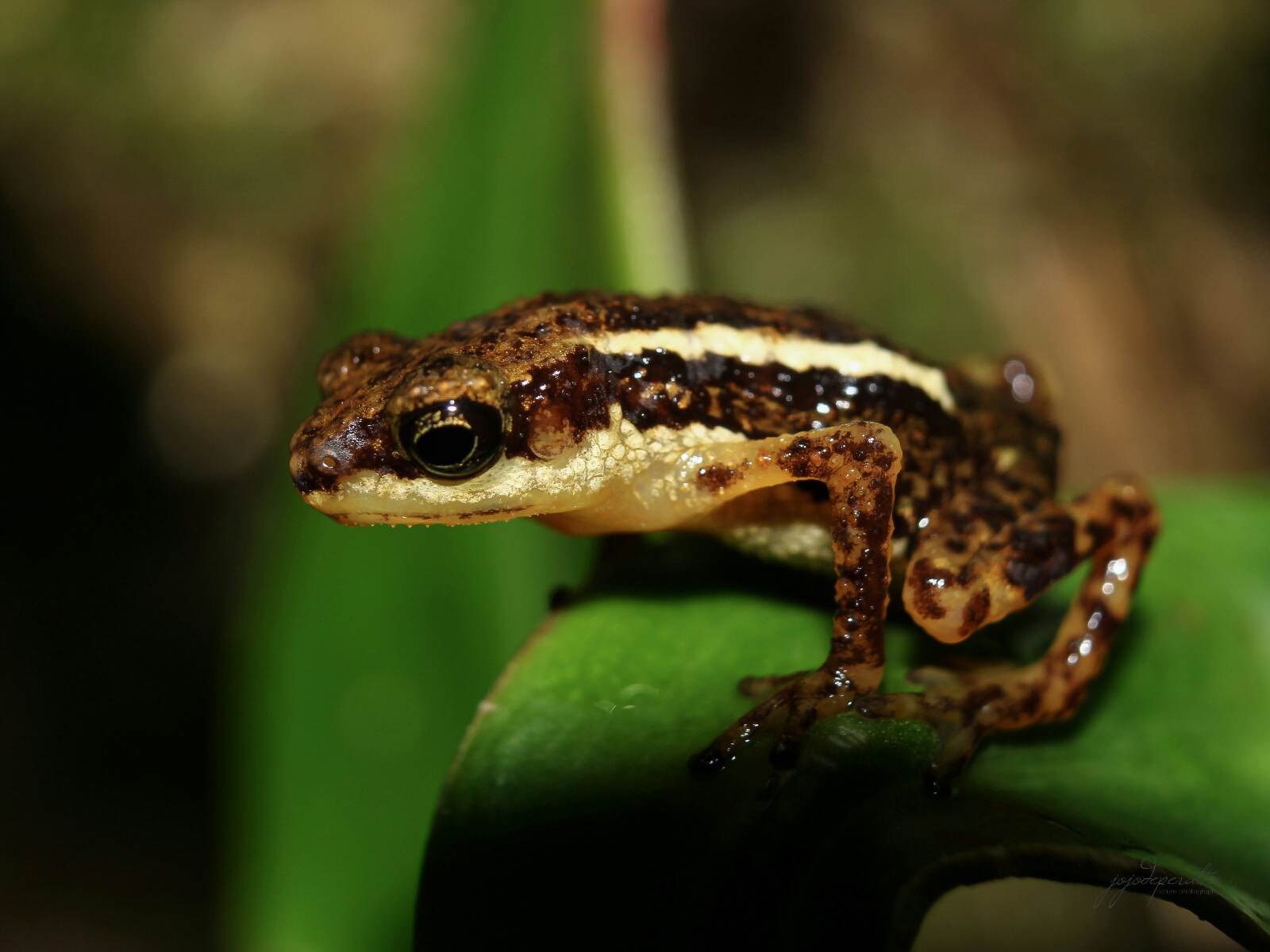 |
| Palawan Toadlet in Mount Peel. |
The Pelophryne albotaeniata has wide distribution in Palawan. We can't visualize how habitat deforestation and conversion of forest to farming can drastically affect this species because it is thriving in high places where there are no large trees to entice loggers and rocky ridges and peaks where no crops will grow. Some of the best mossy forests where this species thrives are mostly inaccessible to locals, even to some hikers. This toadlet sometimes occurs at mid-elevation, mostly near large rivers and mountain streams, but is rarely seen. Almaciga gatherers of the Tagbanua tribe on the western coast believe that toadlets found at mid-elevation were carried down by flash floods during the rainy season.
 |
| Palawan toadlet in Mount Stavely |
This species remains largely understudied, and additional studies are necessary to gain a comprehensive understanding of its behavior and biology. A search on the internet reveals little information about this creature, and there is some information that could add more confusion. It is amazing that for forty years this creature was lost to science but not to locals, tribes, and mountaineers. This creature has been right under our noses. It thrives in the wild, hopping, ticking, and engaging in its froggy activities as usual. We only need to know where and how to find them.


