Cyrtodactylus redimiculus (King, 1962) is a member of the diverse genus of Asian geckos called the bent-toed geckos or bow-fingered geckos, it is endemic to Palawan, where it's commonly known as the Palawan Bent-toed Gecko. The species patchy distribution is confined to forested areas and is believed to be restricted to central and southern portions of Palawan.
 |
| Palawan Bent-toed Gecko |
This attractive gecko has slender digits that lack expanded pads. The fingers and toes are well adapted for gripping on tree bark and rough surfaces. Its coloration is a blend of tan and brown with light bands on the body and along the tail that are more distinct in juveniles. It has large dark brown eyes that have vertical pupils. The species is primarily nocturnal and was often seen hunting for food high up on trees and across the forest floor at night. It likes to hide inside tree hollows, under fallen logs, and in rock crevices during the day.
 |
| Palawan Bent-toed Gecko |
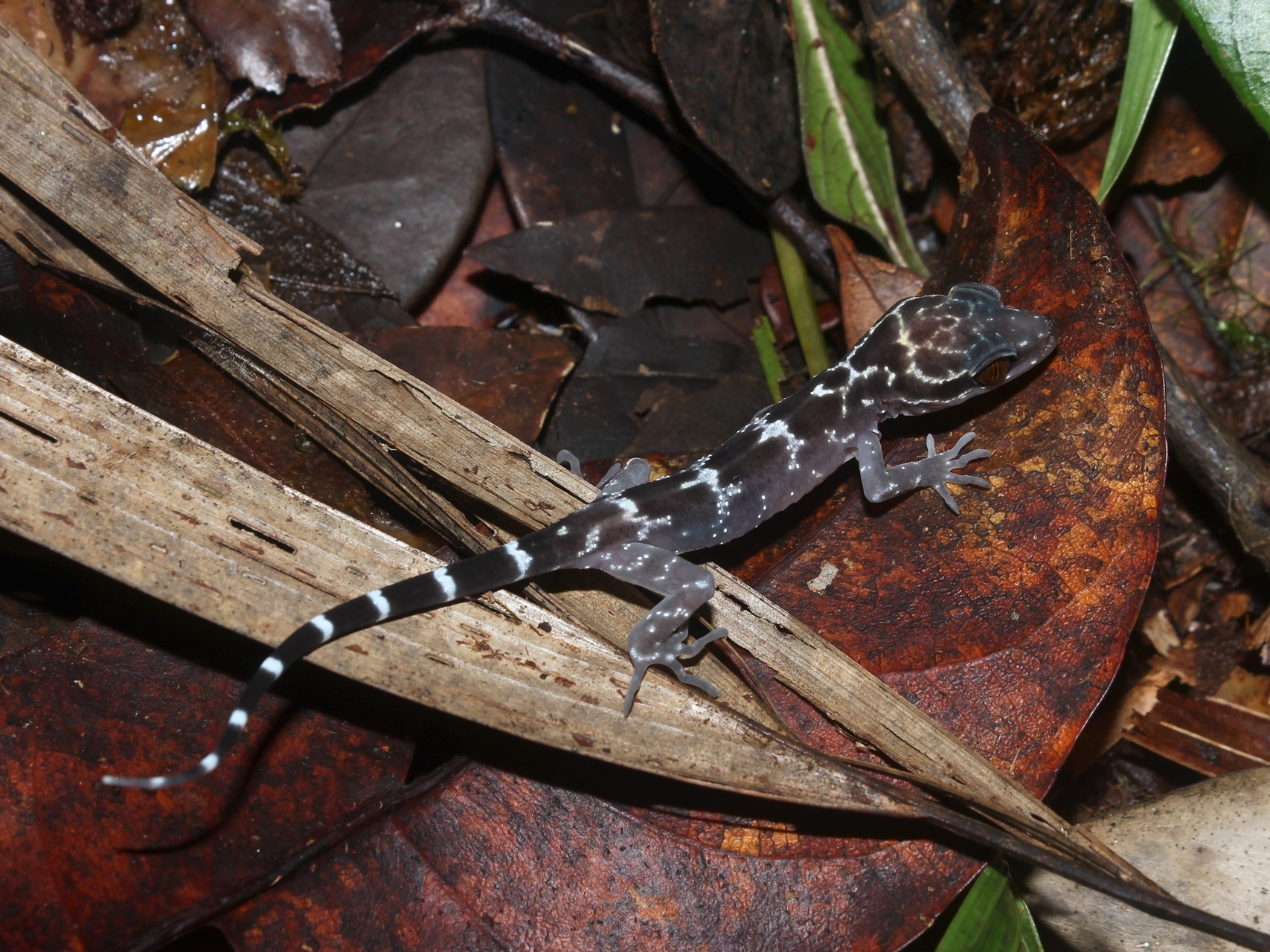 |
| A juvenile Palawan Bent-toed Gecko |
The Palawan bent-toed gecko is currently classified as Near Threatened on the IUCN Red List but is believed to be almost qualified as Vulnerable because of the restriction of its distribution and the ongoing decline of suitable forest habitat. Its survival is intrinsically linked to the health of Palawan’s forests, which are under pressure from illegal logging, mining, and the conversion of land for small farming and shifting cultivation.


